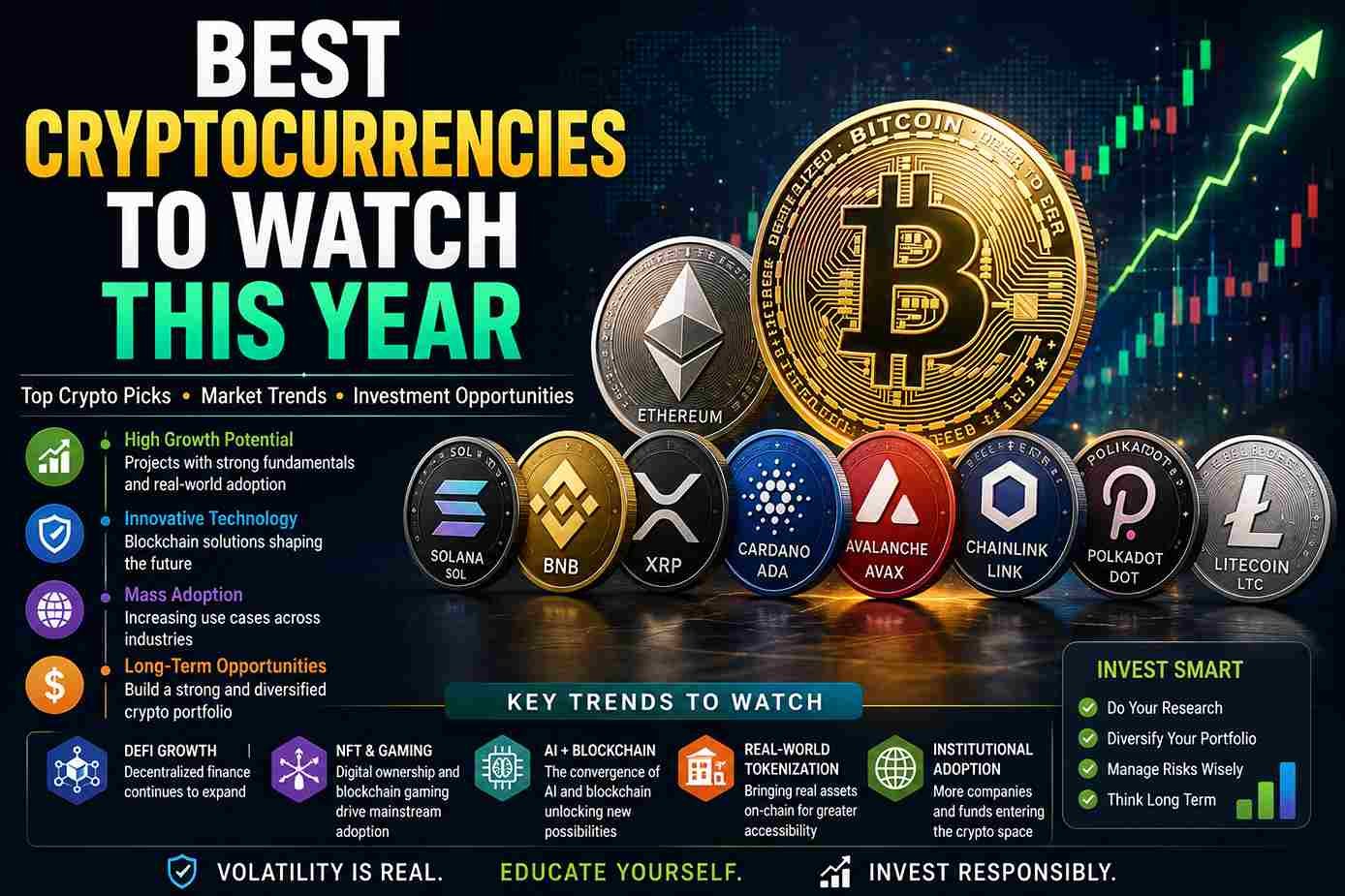
Best Cryptocurrencies to Watch This Year
The cryptocurrency market continues to evolve rapidly, creating new opportunities for investors, developers, and businesses worldwide. From Bitcoin’s emergence as the first decentralized digital currency to the growth of blockchain-powered ecosystems, cryptocurrencies have become an important part of the global financial landscape.
Whether you’re a beginner exploring digital assets or an experienced investor looking to diversify your portfolio, knowing which cryptocurrencies to watch can help you make more informed decisions. However, it’s important to remember that cryptocurrencies are highly volatile, and no investment guarantees future profits.
In this guide, we’ll examine some of the most widely followed cryptocurrencies this year, explain their technology and use cases, discuss their potential opportunities and risks, and provide practical tips for investing responsibly.
—
Understanding Cryptocurrency
A cryptocurrency is a **digital asset** secured by cryptography and powered by blockchain technology. Unlike traditional currencies, most cryptocurrencies operate on decentralized networks without central bank control.
Key characteristics include:
* Decentralized networks
* Secure blockchain technology
* Peer-to-peer transactions
* Global accessibility
* Transparent transaction records
* Limited supply for some cryptocurrencies
These features have helped cryptocurrencies gain attention from both retail and institutional investors.
—
Why Investors Follow Cryptocurrencies
Several factors make cryptocurrencies attractive to investors:
* Potential for long-term growth
* Continuous blockchain innovation
* Expanding real-world adoption
* Portfolio diversification
* Decentralized finance (DeFi)
* Smart contract capabilities
* Increasing institutional interest
Despite these advantages, cryptocurrencies remain among the most volatile investment assets.
—
1. Bitcoin (BTC)
Bitcoin remains the largest and most recognized cryptocurrency by market capitalization.
Why Watch Bitcoin?
* First cryptocurrency
* Limited supply of 21 million coins
* Strong brand recognition
* High liquidity
* Increasing institutional adoption
* Often viewed as “digital gold”
### Potential Advantages
* Long-term store of value (according to many investors)
* Broad exchange availability
* Large global user base
Risks
* Significant price volatility
* Regulatory developments
* Macroeconomic influences
Bitcoin continues to serve as a benchmark for the overall cryptocurrency market.
—
2. Ethereum (ETH)
Ethereum introduced programmable smart contracts, enabling developers to build decentralized applications (dApps).
Why Watch Ethereum?
* Largest smart contract platform
* Supports decentralized finance (DeFi)
* Powers many NFT ecosystems
* Extensive developer community
Strengths
* Strong blockchain ecosystem
* Continuous network improvements
* Wide adoption among developers
Ethereum remains a leading blockchain for innovation.
—
3. Solana (SOL)
Solana is designed to process transactions quickly while maintaining relatively low transaction costs.
Reasons Investors Watch Solana
* High transaction throughput
* Growing developer ecosystem
* Expanding decentralized application support
Risks
* Strong competition from other blockchain platforms
* Network reliability challenges have occurred in the past
—
4. BNB
BNB is closely associated with one of the world’s largest cryptocurrency ecosystems.
Key Features
* Used for transaction fees
* Supports decentralized applications
* Powers blockchain-based services
Why It Matters
Its utility within its ecosystem has made it a closely watched digital asset.
—
5. XRP
XRP focuses on facilitating faster and potentially lower-cost cross-border payments.
Reasons Investors Watch XRP
* International payment solutions
* Fast transaction settlement
* Established presence in the digital asset industry
Regulatory developments have significantly influenced XRP’s market performance in recent years.
—
6. Cardano (ADA)
Cardano emphasizes academic research and peer-reviewed development.
Advantages
* Energy-efficient blockchain
* Smart contract functionality
* Long-term development roadmap
Cardano continues expanding its blockchain ecosystem through ongoing upgrades.
—
7. Avalanche (AVAX)
Avalanche offers a blockchain platform focused on scalability and rapid transaction processing.
Highlights
* Smart contracts
* Decentralized applications
* Fast finality
* Growing developer adoption
—
8. Chainlink (LINK)
Chainlink provides decentralized oracle services that connect blockchains with external data sources.
Importance
Many blockchain applications rely on accurate real-world data.
Chainlink helps provide:
* Weather information
* Financial market data
* Sports results
* Asset prices
Its infrastructure role makes it an important project to monitor.
—
9. Polkadot (DOT)
Polkadot aims to improve communication between different blockchain networks.
Features
* Blockchain interoperability
* Shared security
* Cross-chain communication
As blockchain ecosystems continue expanding, interoperability remains an important area of development.
—
10. Litecoin (LTC)
Often described as an earlier alternative to Bitcoin, Litecoin focuses on faster transaction processing.
Benefits
* Long operating history
* Wide exchange support
* Lower transaction costs than Bitcoin in many cases
Although newer projects have emerged, Litecoin continues to maintain an active community.
—
Emerging Areas to Watch
Beyond individual cryptocurrencies, investors are closely following broader blockchain trends.
Artificial Intelligence (AI) and Blockchain
Projects combining AI with blockchain technology continue attracting attention.
Potential applications include:
* Data verification
* Automation
* Decentralized computing
* AI marketplaces
—
Decentralized Finance (DeFi)
DeFi platforms provide financial services such as:
* Lending
* Borrowing
* Trading
* Yield generation
without relying on traditional financial intermediaries.
—
Tokenization
Real-world assets such as real estate, art, and securities are increasingly being represented as blockchain-based digital tokens.
Tokenization may improve accessibility and liquidity for certain asset classes.
—
Blockchain Gaming
Play-to-earn games and digital ownership continue evolving, though adoption and success vary by project.
—
How to Evaluate a Cryptocurrency
Before investing, consider several factors.
Market Capitalization
Larger cryptocurrencies often have greater liquidity but are not necessarily less risky.
Technology
Understand the blockchain’s purpose and technical capabilities.
Development Activity
Active development may indicate ongoing improvements and community engagement.
Adoption
Look at real-world usage by businesses, developers, and consumers.
Security
Evaluate the network’s history, security practices, and resilience.
Tokenomics
Understand the supply, issuance schedule, and utility of the cryptocurrency.
—
Risks of Cryptocurrency Investing
Every cryptocurrency investment carries risk.
Market Volatility
Prices can rise or fall significantly in short periods.
Regulatory Changes
Government policies can influence market activity.
Security Risks
Investors should protect their accounts using strong passwords, two-factor authentication, and secure wallets.
Scams
Avoid projects promising guaranteed returns or unrealistic profits.
Technology Risk
New technologies may face competition, bugs, or changing user adoption.
—
Tips for Beginner Crypto Investors
If you’re new to cryptocurrency:
* Invest only what you can afford to keep invested through volatility.
* Diversify rather than relying on a single coin.
* Research every project thoroughly.
* Use reputable exchanges and wallets.
* Consider long-term investing instead of reacting to short-term market movements.
* Stay informed through reliable sources rather than social media hype.
Responsible investing begins with education.
—
Frequently Asked Questions
Which Cryptocurrency Is Best for Beginners?
Many beginners start by learning about established cryptocurrencies with larger market capitalizations, while remembering that every investment carries risk. The right choice depends on your goals and risk tolerance.
—
Are Cryptocurrencies Safe Investments?
Cryptocurrencies can offer opportunities but are also highly volatile. Prices may change rapidly, and there are no guaranteed returns.
—
Should I Invest in Multiple Cryptocurrencies?
Diversification can help reduce concentration risk. Holding a mix of assets may provide a more balanced approach than relying on a single cryptocurrency.
—
Can Cryptocurrency Help Build Long-Term Wealth?
Some investors include cryptocurrencies as a small part of a diversified portfolio. Long-term outcomes remain uncertain, and investment decisions should align with your financial goals and risk tolerance.
—
Final Thoughts
The cryptocurrency market continues to evolve through technological innovation, increasing adoption, and changing regulations. Well-established cryptocurrencies such as **Bitcoin**, **Ethereum**, **Solana**, **BNB**, **XRP**, **Cardano**, **Avalanche**, **Chainlink**, **Polkadot**, and **Litecoin** remain among the digital assets that many investors and analysts watch closely.
However, no cryptocurrency guarantees future success. Market conditions, technology, competition, and regulation can all influence performance. Rather than chasing short-term trends, focus on understanding each project’s purpose, evaluating its fundamentals, and building a diversified investment strategy that matches your financial objectives.
Successful crypto investing is based on patience, research, and disciplined risk management—not speculation alone.